Home
Home
If your child has told you they want to study music at university, it’s likely your reaction was mixed. You may feel proud of their passion and relieved that they care deeply about something, but also worried. Worried about money, stability, long-term prospects, and whether supporting this path is the responsible thing to do.
In my role as an Academic Dean, I’ve met with many parents in exactly this position. What’s struck me most is how measured and thoughtful these conversations are. Parents aren’t dismissing their child’s ambitions, they want to understand them, weigh the risks carefully, and help to make the best possible decisions.
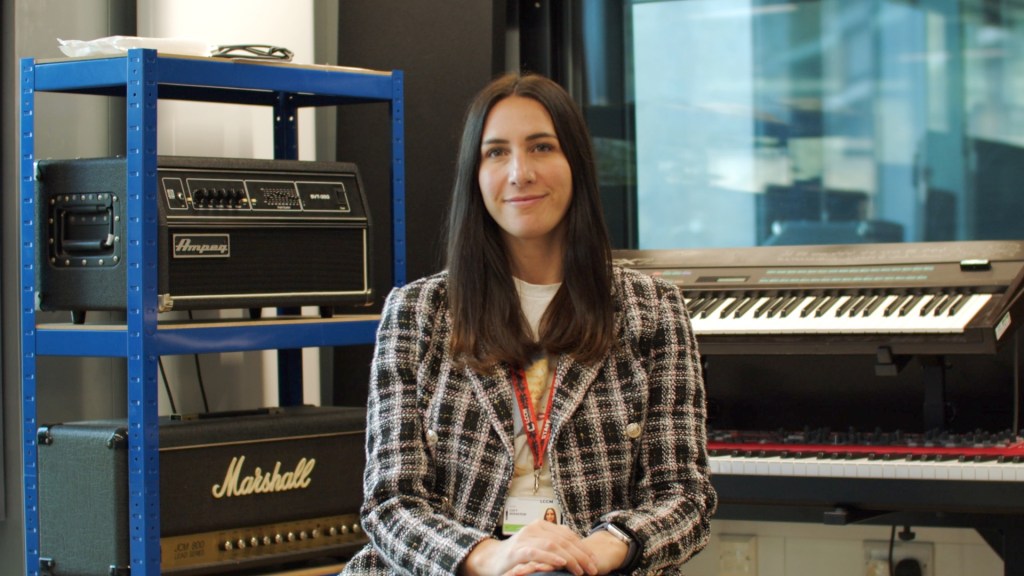
Before we go on, I should say a little about where I’m coming from. I lead the development and delivery of industry-aligned programmes in music and entertainment, and I’ve spent over 15 years working in higher education. My work focuses on academic quality, student success, and ensuring that what we teach genuinely prepares students for meaningful careers in a rapidly evolving industry. I’m also deeply interested in access and participation, particularly how curriculum design can support students from underrepresented backgrounds. That perspective shapes how I think about music education and how I talk to parents about it.
Over time, it’s become clear to me that what parents are really asking is not “Is music a good idea?” They’re asking: “What does a future in music actually look like today and how can I make sure my child is prepared for adult working life?”
That’s a question worth answering honestly.
What does music industry look like today?
Perceptions of music education and the music industry haven’t always kept pace with how quickly the sector has evolved. Parents often tell me they imagine studying music as training purely as a performer, hoping to be discovered and struggling financially unless everything goes perfectly. That image understandably causes anxiety for parents, but it no longer reflects how most creative careers actually work.
Today’s music and creative industries are broad, professional and interconnected. Alongside performance, there are careers in production, publishing, licensing, digital marketing, event management, music supervision for film and TV, content creation, education and many more.
Most professionals don’t follow a single, linear path. In reality, they build portfolio careers, combining skills, roles and income streams over time. Stability now comes less from one job role and more from adaptability, professionalism and strong working relationships. Good music education recognises this and prepares students accordingly.
What is modern music education all about?
In my experience, a contemporary music degree is not just about refining talent. It’s about helping young people grow into capable, confident professionals who can function in demanding and fast-changing industries.
Students should be developing creative and technical skills, of course, but also learning how to collaborate, communicate professionally, manage projects, and respond to feedback. These qualities are what sustain real creative careers.
University study also offers something that is difficult to replicate independently: a structured environment where students can experiment, fail safely, reflect, and grow alongside peers who often become their future professional networks.
When parents ask me what really matters in music education, this is usually where the conversation lands.
Conservatoire or contemporary music education: which is right?
This is a question I’m asked often, and my answer is always a careful one.
For some students – particularly those pursuing highly specialised classical training – a conservatoire can be the right environment. Conservatoires are designed to prepare a small number of musicians for very specific and highly competitive outcomes, and they do that extremely well.
But one of my strongest beliefs as an educator is that there is no single “correct” route into music, only environments that are more or less suited to different kinds of learners.
Many students today are interested in contemporary music and creative industries, and value versatility, collaboration and entrepreneurship as much as technical excellence. For these students, the goal isn’t one fixed role, but a working life that can evolve in many different directions.
So the question to ask is: “which environment prepares my child for the kind of career they really want to build?
What kinds of career paths actually exist in the music industry and are they sustainable?
This is often the concern sitting underneath every other question parents ask me: not whether careers exist, but whether they can realistically support an adult life over time.
What’s important to understand is that sustainability in the creative industries is usually built gradually. Early in a career, graduates often take on a mix of work including creative projects, freelance or part-time roles, assisting on productions and live events, and so on. At this stage, the focus is on gaining experience and building professional relationships.
As time goes on, that mix becomes more intentional. Individuals learn where their strengths lie, networks deepen, reputations grow, and opportunities increase through trusted relationships rather than constant job searching.
Our responsibility as educators is not to promise certainty, but to ensure students graduate with the skills, confidence and understanding needed to build careers that become more stable over time to suit different stages of life.
How does this translate into the way students are taught?
Over time, my understanding of how the music and creative industries work has shaped the way I think about what students need from their education. During my time at London College of Contemporary Music (LCCM) as an Academic Dean, I’ve seen how closely the student experience aligns with those realities.
What consistently shapes the student experience at LCCM is the learning environment itself and the people guiding students through it. Many of those teaching at LCCM bring direct experience from the music and creative industries, and a number continue to work professionally alongside their academic roles. For students, this means learning from people who understand not only how the industry functions in theory, but how it actually operates in practice today.
Equally important is the nature of the learning community. The experience at LCCM is grounded in a culture of collaboration, care, and academic and professional rigour. From early in their studies, students engage with professional practice through real projects, industry briefs and collaborative work, and in many cases paid opportunities.
In my experience, this combination helps students develop a realistic understanding of what it means to work professionally within a framework that supports learning, reflection and growth as they find their feet.
This is the kind of learning environment that helps students graduate with a candid understanding of how the industry works, shaped by educators who are actively part of it and by experiences that mirror professional practice.
What evidence is there that this approach works?
Our graduates go on to work across all areas of music including performance, production, publishing, sync, management, education, content creation and creative entrepreneurship. Some go on to very visible careers as artists and performers, while others build long-term, behind-the-scenes careers that are just as stable and meaningful.
What unites these different outcomes is not just talent and skill, but professional confidence, adaptability and strong networks. Graduates leave with real portfolios, real experience, and an understanding of how to work collaboratively and professionally. Just as importantly, they leave with peer communities that often continue to support one another long after graduation, becoming part of their professional ecosystem.
Many alumni remain connected to the college through mentoring, masterclasses, collaborations and industry projects. These ongoing relationships benefit current students while also providing alumni with opportunities for collaboration, networking and professional growth after graduation.
A final thought…
If there’s one thing I hope parents take away from these conversations, it’s this: supporting a creative ambition doesn’t have to mean following in blind faith, it means getting informed to provide thoughtful support.
Studying music isn’t about chasing a single definition of success. It’s about equipping young people with the mindset and confidence to navigate a complex and changing industry. When education genuinely prepares students for adult working life, supporting a child’s creative path becomes not a leap of faith, but a considered and responsible decision.
To find out more about how to apply for music courses at LCCM, head here.
Lucy Bernstein, Academic Dean, LCCM