Home
Home
One thing students often wonder before starting a music course is what kind of music tech they’ll be using as part of their studies.
A lot of modern music creation revolves around a few core tools. Digital audio workstations, audio interfaces and other types of music making software all play a role in how producers, songwriters and performers build tracks and develop their sound. Because so much of the creative process now happens through these technologies, it helps to have a basic understanding of what they are and how they work before you get started.
Here are some of the main pieces of digital audio technology LCCM students use when creating music, how they work, and what they help you do as a musician or producer.
Digital Audio Workstations (DAWs)
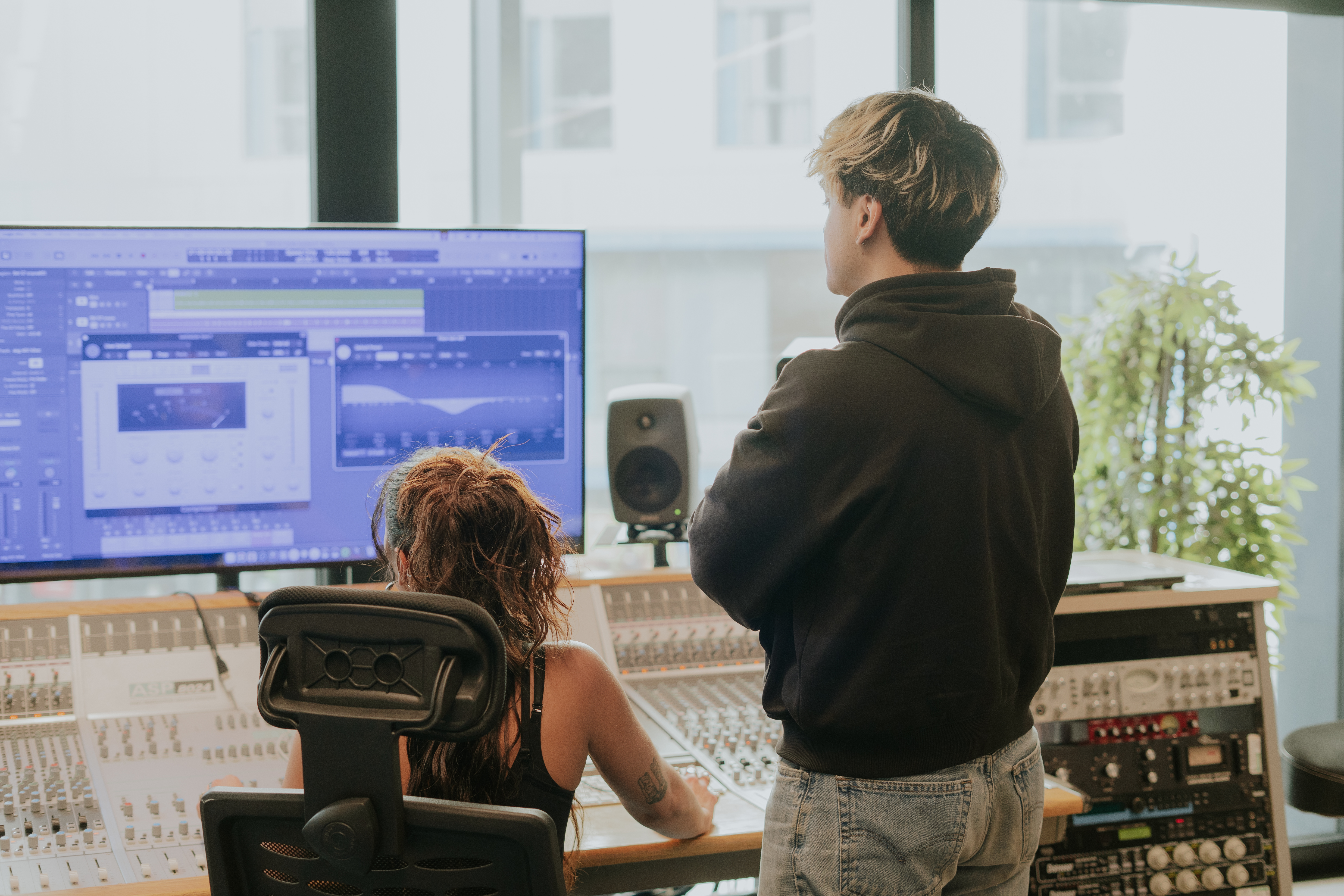
A digital audio workstation, usually called a DAW, is the main piece of software used to create and produce music.
It’s where you record vocals, build arrangements, edit audio and mix everything together into a finished track. Once you start producing, the DAW quickly becomes the place where most of your ideas take shape.
Different producers gravitate towards different platforms. Ableton Live is popular with electronic producers, Logic Pro is often used for songwriting and production, and Pro Tools is widely considered the industry standard for DAWs in professional recording studios.
Once you’re working inside a DAW, most other pieces of music tech connect to it in some way.
Audio Interfaces
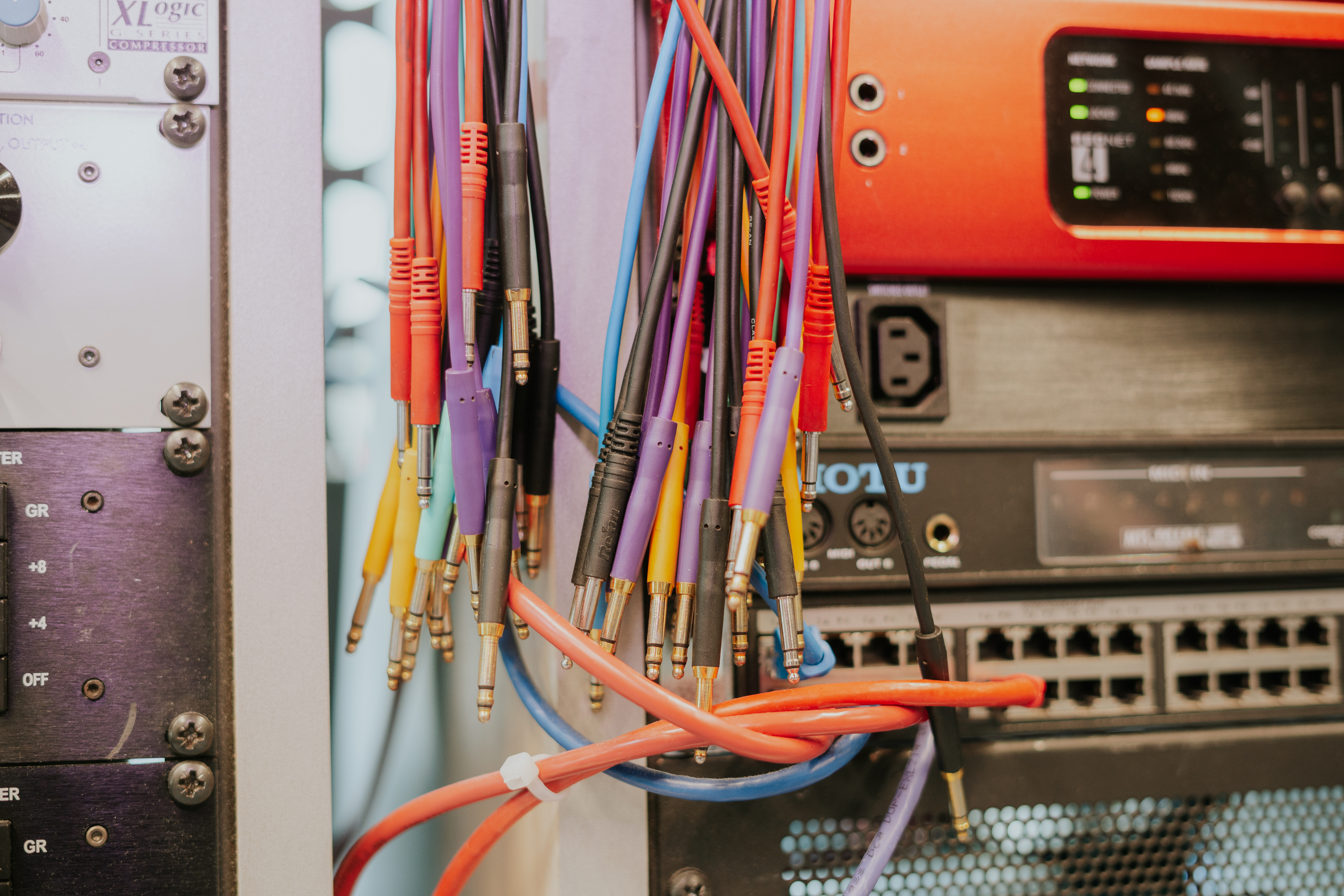
Recording straight into a laptop usually results in lower sound quality, which is why audio interfaces are such a key part of digital audio technology. This is the device that allows you to record sound directly into a DAW.
Microphones, guitars, keyboards and other instruments all plug into the interface, which converts the sound into a digital signal your digital audio workstation can record.
In a studio setup, the interface is essentially the bridge between the performance and the software where everything gets edited and mixed.
Students studying Music Production & Sound Engineering, Music Performance & Production and Composition for Film, Games & Other Media regularly use audio interfaces when recording vocals and instruments.
MIDI Controllers
A MIDI controller is a device that lets you play and control instruments inside your DAW.
MIDI stands for Musical Instrument Digital Interface and works like a communication system that lets musical devices and software talk to each other. Instead of recording actual sound, it sends information to your software about the notes you play – like how hard you hit a note and how long you held it.
MIDI controllers often come in the form of small keyboards or pad controllers, and they allow you to trigger sounds, play melodies or program beats using virtual musical instruments. For many producers, MIDI controllers make the production process feel much more natural and authentic.
MIDI controllers are commonly used by students on Commercial Music , Music Performance & Production, Music Production & Sound Engineering and Composition for Film, Games & Other Media.
Plugins and Virtual Instruments
Plugins are additional software tools that run inside a digital audio workstation.
Some plugins are instruments, like synths, drum machines or orchestral sounds. Others are effects that shape the sound of a track, such as reverb, delay or distortion.
They’re a huge part of modern music making software, allowing producers to experiment with sounds and build their own sonic style without needing lots of physical hardware.
Students studying Music Production & Sound Engineering, Commercial Music and Composition for Film, Games & Other Media often work with plugins and virtual instruments as part of their production work.
Studio Headphones and Monitors
Studio headphones are designed differently from consumer or gaming headphones because they aim for a much more neutral sound.
This means that rather than boosting bass or softening frequencies, studio headphones reproduce the track as accurately as possible. This is important when mixing, because producers need to hear what the music actually sounds like in order to make the right decisions about EQ, balance and dynamics.
When listening back to a track, producers usually rely on either studio headphones or monitors (speakers) for a clearer and more reliable reference point when working inside a digital audio workstation.
Accurate monitoring is especially important if you’re studying Music Production & Sound Engineering and Music Performance & Production.
Music Notation Software
Music notation software allows musicians to write and share sheet music digitally.
Instead of writing notes out by hand, composers can use software like Sibelius or MuseScore to build full scores, arrange parts for different instruments and make quick edits to their compositions. The software translates musical ideas into standard notation that other musicians can easily read and perform.
This type of musical technology is especially useful for orchestral writing, film scoring and composition projects and is most often used by students studying Composition for Film, Games & Other Media.
Live Performance Technology
Live performance technology refers to the tools musicians use to control and perform their music on stage.
Many artists now incorporate laptops running a digital audio workstation, alongside MIDI controllers used to trigger samples, play virtual instruments or control effects during a set. Performance software can also manage backing tracks, loops and live processing, allowing artists to recreate elements of a studio production in a live environment.
Alongside these core tools, newer technologies are also beginning to influence live shows. AI-driven software, advanced visual systems and immersive sound technologies such as spatial audio are opening up new creative possibilities for performers looking to build more interactive and dynamic stage experiences.
Students on Music Performance & Production and Commercial Music often work with this kind of technology when developing live sets.
If you’re wondering what it’s like to study with us at LCCM – find out more about what to expect from an LCCM Open Day.